


"To Be or Not to Be" in Energy Diplomacy, or Who Will Maintain Balance on the Brink?
01.04.2026 | 01:24 |


ORIENTIR | March 30. Late Monday night, as history drew to a close, giving way to the early morning of Tuesday, March 31, global markets stubbornly continued their climb through critical turbulence.
Even US Treasury Secretary Scott Bessent's emergency announcement to temporarily lift sanctions on 140 million barrels of Iranian oil stored in tankers failed to dampen the speculators' ardor.
The Trump administration's forced "white flag" stems from the acute crisis in the Strait of Hormuz. The blockage has driven oil prices beyond reasonable limits. To prevent further increases in gasoline prices within the United States, Washington was forced to "unseal" the sanctioned Iranian oil already floating in the water.
Taking into account similar concessions for Russian cargo, the total "amnesty" affected approximately 270 million barrels.
However, the illusion of stability will quickly dissipate, as the physical shortage of resources due to the blockade of the straits is more powerful than any political declarations. What's needed here is not a temporary license, but systematic energy diplomacy.
While Brent crude oil is storming the $117.15 mark, and the price of gas in Europe has stalled at a frightening $1,465, the world is beginning to sense a real threat. Rolling power outages – from Southeast Asia to Latin America – are becoming a new reality.
Against this backdrop, the contrast between global chaos and regional stability is striking. In Hong Kong, a liter of gasoline costs an exorbitant $3.85, and in some parts of the US, fuel restrictions are being introduced, while Central Asia maintains an enviable calm. In Turkmenistan, the price of a liter of fuel is held at $0.43, making local resources a reliable "energy vaccine" for its citizens against the fuel and energy pandemic.
The crisis has affected all sectors. Gold, which had stabilized at $2,180, experienced a temporary pullback as funds were forced to sell the precious metal to cover losses from the collapse of the STOXX Europe 600 index. Bitcoin, which many considered a safe haven, is trembling alongside news from the Persian Gulf, proving that digital assets are not yet capable of replacing real resources.
The main battle is unfolding in agricultural fields. Due to expensive gas, Western agrochemical giants are halting production. In this situation, the importance of Turkmenistan's factories in Garabogaz and Mary is critically increased.
Without their products—the "vitamins of the earth"—spring sowing in many parts of Eurasia will be at risk. Even the pharmaceutical industry in India, a global pharmaceutical hub, is signaling a shortage of petrochemical components for essential medicines.
The voices of world leaders are becoming increasingly harsh. Vladimir Putin is placing emphasis on secure land routes free from naval blockades. Beijing, represented by Wang Yi, is confirming its readiness to strengthen the "belt of stability" in Central Asia. And Donald Trump is warning of a fuel collapse in the US if security in the Gulf is not restored.
Meanwhile, Ursula von der Leyen laments that "Europe is experiencing the most severe industrial stress test in its history. We need to not just economize, but reinvent our energy independence right now."
Against this backdrop, OPEC+'s silence appears like a measured pause from a player aware of the true value of the resource.
The current price surge poses a dangerous temptation for oil exporters. Today's windfall could lead to a collapse in global demand tomorrow. And while oil prices may eventually adjust, natural gas will remain the primary factor in the struggle for survival.
The eternal question "To be or not to be?" must be answered today not by ballistic missiles, but by diplomats. Ultimately, the value of any resource is determined not by a stock index, but by the peaceful skies above the heads of ordinary citizens and their hospitable dastarkhan.
These are truths, simple as air, and just like air, irreplaceable, which the international community is obliged to protect.
Bekdurdy AMANSARYEV
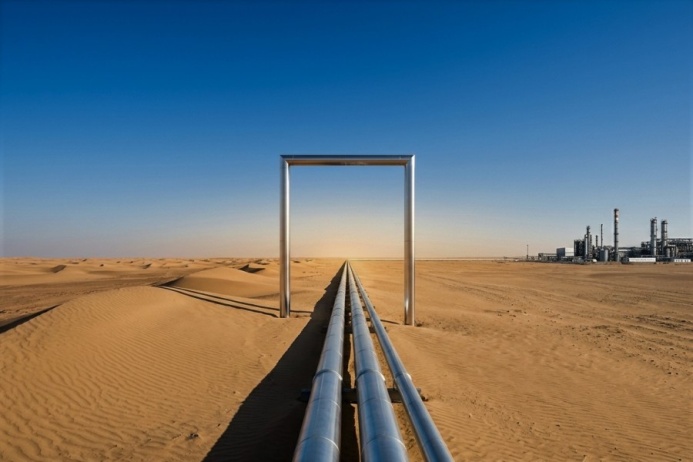
Photo: ORIENT/AI
Read also:
01.04.2026
|01:27
31.03.2026
|01:48
31.03.2026
|01:16
28.03.2026
|02:41
25.03.2026
|17:33
24.03.2026
|15:40
23.03.2026
|17:25