


Turkmenistan presented a new paradigm for regional security in Dushanbe
30.04.2026 | 23:48 |
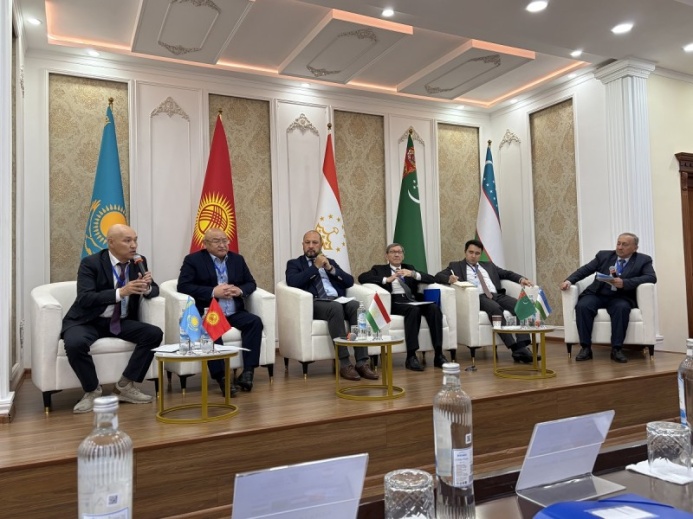


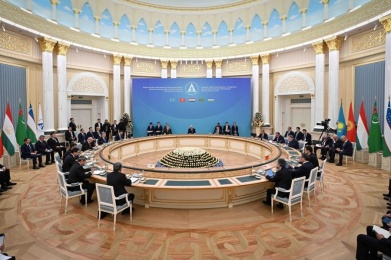
On April 30, the Central Asian Security Forum was held in Dushanbe, bringing together leading experts and diplomats from the region. The Forum's concept emphasizes that regional security today is not simply the absence of military threats, but also a complex system of interconnections: from transport corridors to climate resilience.
Representatives of leading think tanks and research institutes from Central Asian countries, representatives of ministries and agencies from the region, and independent experts focused on analyzing Central Asia's strategic opportunities in the context of "confrontation and cooperation among external actors." Representatives from Turkmenistan spoke in all four sessions of the forum, covering a full range of issues: from the region's political map to transport security and economic cooperation.
Amid the transformation of the global order and the erosion of international norms, the Turkmen delegation presented a comprehensive vision of a security architecture based not simply on the mitigation of threats, but on a strategy of preventive creation and sustainable development. Turkmenistan's "proactive foreign policy" and its status of neutrality help to find a balance between global players and regional interests.
From Risk Management to Opportunity Management
Speaking at the first session of the forum on the specifics of intraregional risks, Shiri Shiriev, Director of the Scientific Center for Strategic Studies at the Institute of International Relations of the Ministry of Foreign Affairs of Turkmenistan, outlined a fundamental shift in the regional paradigm.
In his opinion, Central Asia has outgrown the stage of simply responding to challenges. Modern risks, whether water management or demographic issues, are viewed in the Turkmen doctrine not as causes for confrontation, but as "growth points" for strengthening interstate trust.
A key instrument in this transformation is Turkmenistan's permanent neutrality. The report emphasized that neutrality is not a policy of distancing, but an active platform for constructive dialogue, allowing countries in the region to jointly manage common challenges in an atmosphere of transparency.
Transregional Vector and Economic Shield
In his speech at the second session on transregional challenges, Babajan Nurjanov, a member of the Turkmen delegation, presented his position on protecting external borders and countering terrorism. He emphasized that in the era of globalization, Central Asia has become an active player in world politics.
Turkmenistan views regional security as a system of "communicating vessels," where external challenges—from cyber threats to climate change—require not only military but also deep geo-economic solutions.
Afghanistan occupies a special place in this strategy. Ashgabat's position remains unchanged: there is no military solution to the Afghan issue. The implementation of megaprojects such as the TAPI gas pipeline, railways, and power lines is Turkmenistan's practical contribution to transforming Afghanistan from a source of risks into an area of shared opportunities.
Infrastructure Connectivity as a Guarantor of Stability
Bekdurdy Amansaryev, Senior Research Fellow at the Center for Strategic Studies at the Institute of International Relations of the Ministry of Foreign Affairs, analyzed the economic foundations of security in detail. During the third session on economic and transport security, he outlined new trends in economic cooperation and the implementation of transit projects. The expert argued that the region's modern security architecture is determined by the quality of infrastructure and the degree of interconnectedness of economies.
In the Turkmen model, transport and transit serve as a factor of "positive interdependence." The development of Eurasian corridors and transport hubs fosters long-term stability, reducing the region's vulnerability to external shocks.
In this context, Turkmenistan's neutrality serves as a reliable platform for balancing the interests of global power centers, ensuring the implementation of large-scale investment projects.
Vision of the Future: "Dialogue is a Guarantee of Peace"
At the fourth session, dedicated to the potential challenges and strategic potential of Central Asia in the near future, Atageldy Khaldzhanov, Head of the International Economic Cooperation Department of the Ministry of Foreign Affairs of Turkmenistan, called on his colleagues to utilize the current "historical window of opportunity" to finally consolidate the region's sovereignty.
The main message of his report was the need to create such a dense fabric of regional ties that any contradictions will be resolved by the tools of professional diplomacy at their inception. The philosophy of "Dialogue is a Guarantee of Peace" suggests that Central Asia should become not just an arena of rivalry, but a new type of "continental bridge" where the interests of East, West, North, and South find common ground.
Summing up their participation in the forum, experts agreed: Central Asian security is not an external condition, but the result of daily creative work. The "security through development" model proposed by Turkmenistan opens the region's path to long-term prosperity, based on the wisdom of nations and the sovereign equality of states.
Photo: orient.tm
Read also:
30.04.2026
|23:48
30.04.2026
|21:49
30.04.2026
|19:25
26.04.2026
|22:40

26.04.2026
|14:34
23.04.2026
|15:04