Quantum Silver LEGO: Physicists Discover New Phase of Matter
31.05.2026 | 23:29 |
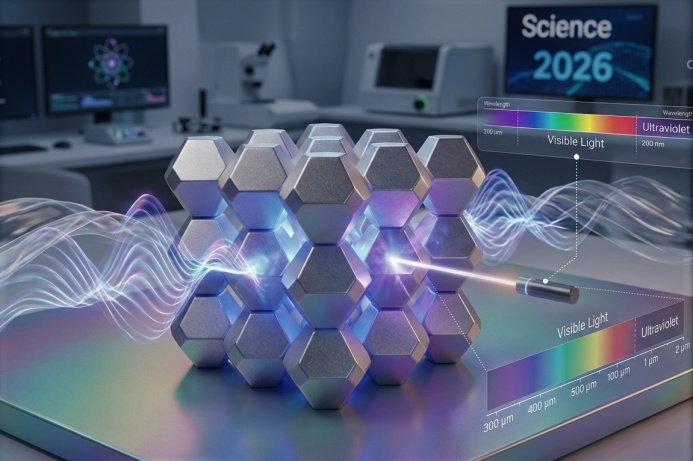


In late May 2026, an international team of physicists from Brown University and the University of Michigan made a fundamental breakthrough in materials science, the results of which were officially published in the prestigious scientific journal Science. For the first time in history, the scientists succeeded in experimentally recreating and stabilizing an intermediate structural phase of matter, which until then had existed solely in the form of theoretical mathematical models and computer simulations.
The essence of the discovery, which the study's authors, led by chemistry professor Ou Chen and lead researcher Yasutaka Nagaoka, ironically compared to a child's LEGO set, lies in the controlled assembly of artificial silver nanoparticles with a special geometry. This achievement paves the way for the creation of a fundamentally new class of quantum materials capable of operating in ordinary household conditions without expensive and bulky cryogenic equipment.
To capture the elusive transition state of the substance, the researchers synthesized unique silver nanoparticles in the shape of truncated octahedrons, dubbed "mecons." These 14-sided microstructures resemble diamonds with their corners truncated.
By varying the synthesis temperature, the physicists learned to finely tune the shape of these blocks from round to cubic, after which they coated them with special long "sticky" molecules (ligands). The forced self-alignment of these elements led to the formation of a so-called superlattice, which literally froze in space, creating a stable new phase of the metal.
The main sensation was revealed when this structure was exposed to ordinary light: the electrons inside the silver "mekons" instantly entered a deep strong coupling mode with photons, beginning to oscillate in absolute synchrony with the light waves. A quantum mechanical entanglement of light and matter occurred—a phenomenon previously observed by physicists only at temperatures close to absolute zero (-273 degrees Celsius) in liquid nitrogen or vacuum conditions. What was this "quantum magic"? Inside this new silver LEGO structure, the electrons (negatively charged particles) behaved anomalously. Imagine a crowded square, where everyone goes about their business, pushing and tripping over each other. This is how electrons behave in an ordinary piece of metal. But when the physicists shone light on the new silver LEGO structure, what they call "deep strong coupling of light and matter" occurred. The electrons within the silver particles suddenly and instantly aligned themselves into a perfect ensemble and began oscillating in absolute, 100% synchrony with the light waves. Light and electrons became a single, indivisible system. It was as if the entire crowd in the square suddenly began dancing a complex ballet in sync, synchronizing each other's movements without a single rehearsal.
The practical significance of this discovery for the global high-tech industry is difficult to overstate, as the stability of quantum optical effects at ordinary room temperature removes the main barrier to the mass production of quantum computers. In traditional circuits, the slightest thermal movement of atoms instantly disrupts the fragile synchronous "dance" of electrons, but the rigid architecture of silver nano-LEGO reliably protects the system from external thermal interference.
This technology could potentially enable the creation of ultra-fast processors, optical sensors, and completely secure communication channels operating in ordinary smartphones and personal devices without cooling systems. As Brown University News notes, the developed method is not just a laboratory curiosity, but a ready-made universal recipe, allowing engineers to construct any type of metamaterial with predetermined exotic properties from custom nanoparticles, changing our understanding of the possibilities of the physical world.
Photo: ORIENT/AI
Read also:

31.05.2026
|07:55


31.05.2026
|00:58

30.05.2026
|15:20