


Ashgabat and Baku Are Synchronizing Transit Infrastructure
02.04.2026 | 23:48 |
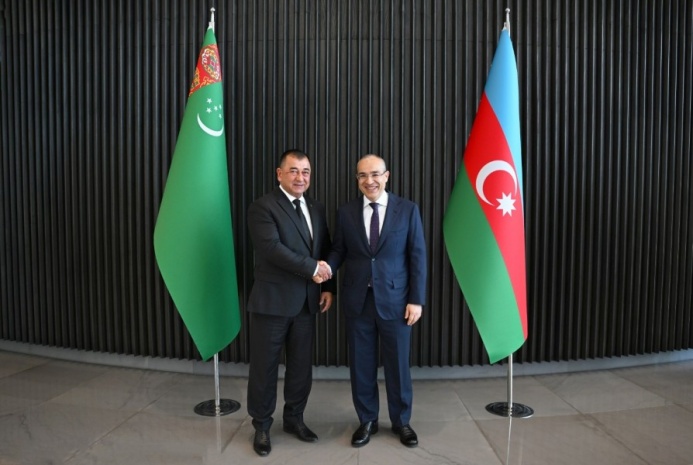


A government delegation from Turkmenistan, led by Deputy Prime Minister Nokerguly Atagulyev, arrived in Azerbaijan on April 1. This visit was a logical continuation of the talks in Georgia, completing the strategic chain of the East-West route.
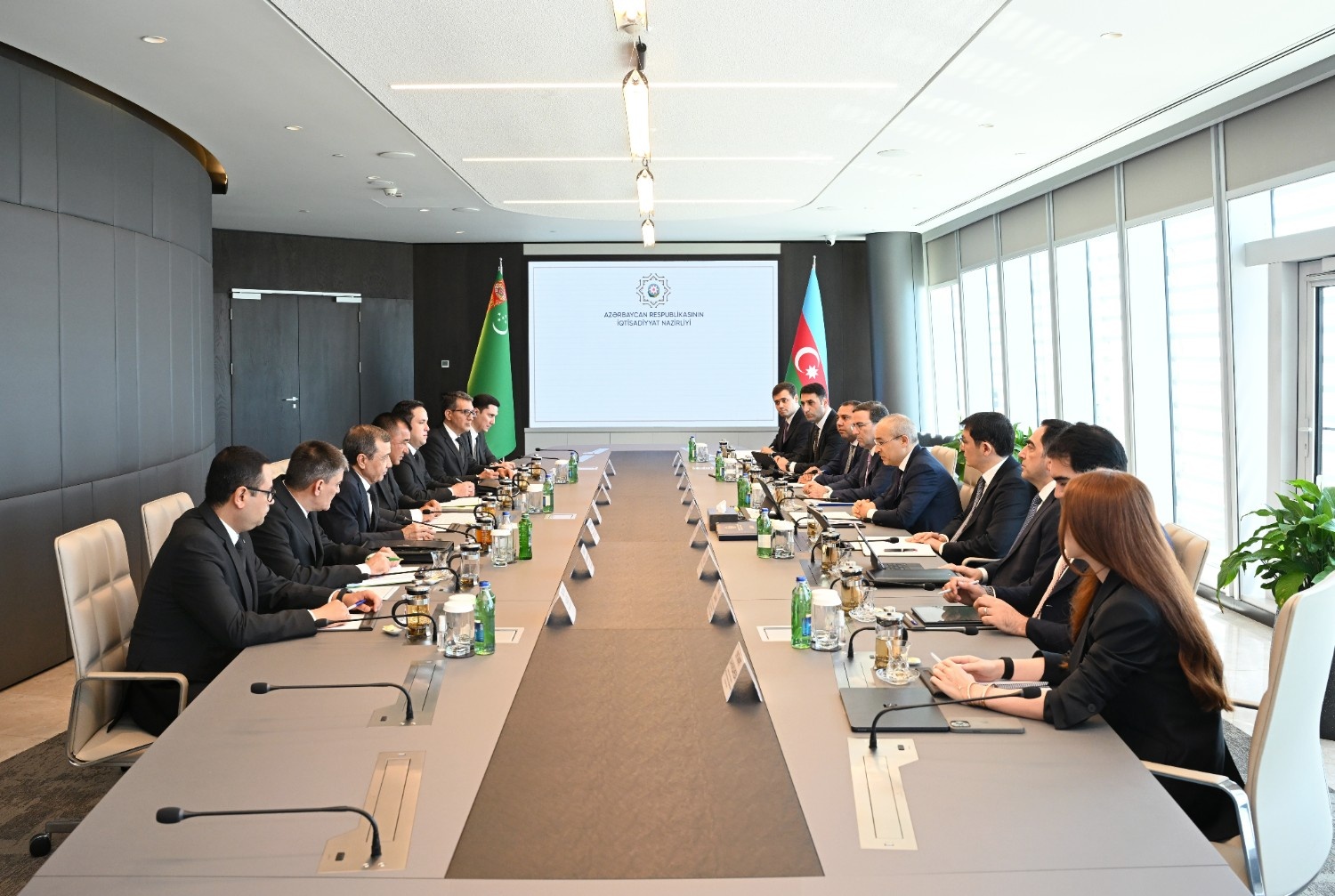
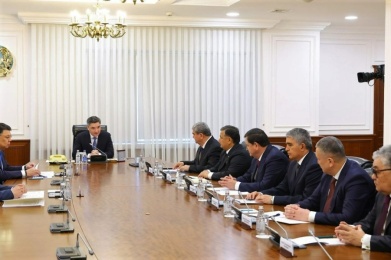
While the focus at the ports of Poti and Anaklia was on access to the Black Sea, in Baku the parties moved on to discussing the "heart" of transit—the Caspian section. At a meeting with Mikayil Jabbarov at the Azerbaijani Ministry of Economy, it was emphasized that the sustainability of the Ashgabat-Baku partnership is the foundation for the stability of the entire Middle Corridor. The parties discussed in detail the expansion of joint activities in energy and logistics, as well as the implementation of new investment projects.
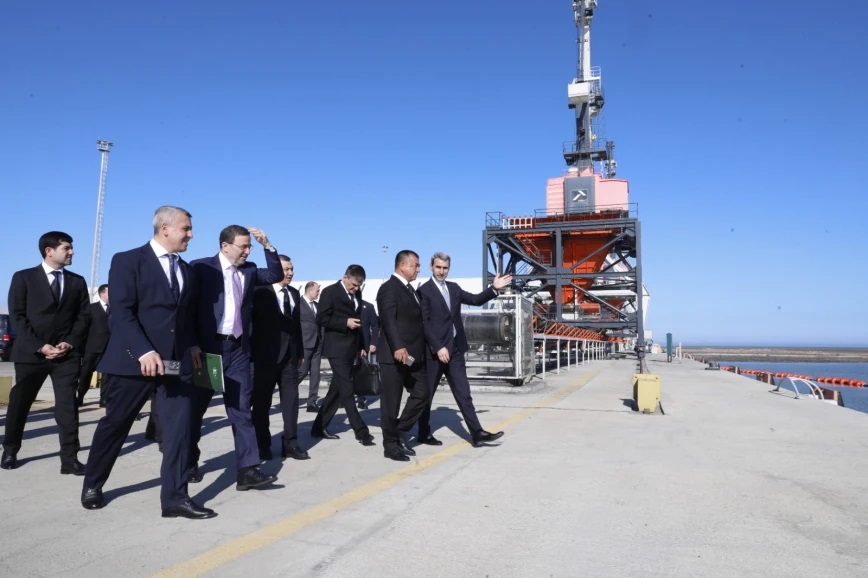
During the visit to the Baku International Sea Trade Port, special attention was paid to the technological compatibility of the two shores of the Caspian Sea. At a meeting with the head of Azerbaijan Railways CJSC, Rovshan Rustamov, specific steps to modernize infrastructure were discussed.
Specifically, the discussion focused on dredging work at the Turkmenbashi International Seaport. This technical measure is important for accommodating large-capacity vessels and increasing cargo volumes. The Turkmen delegation was presented with the experience of the Baku port, which set a historic record last year, handling over 100,000 TEUs (20-foot equivalent units).
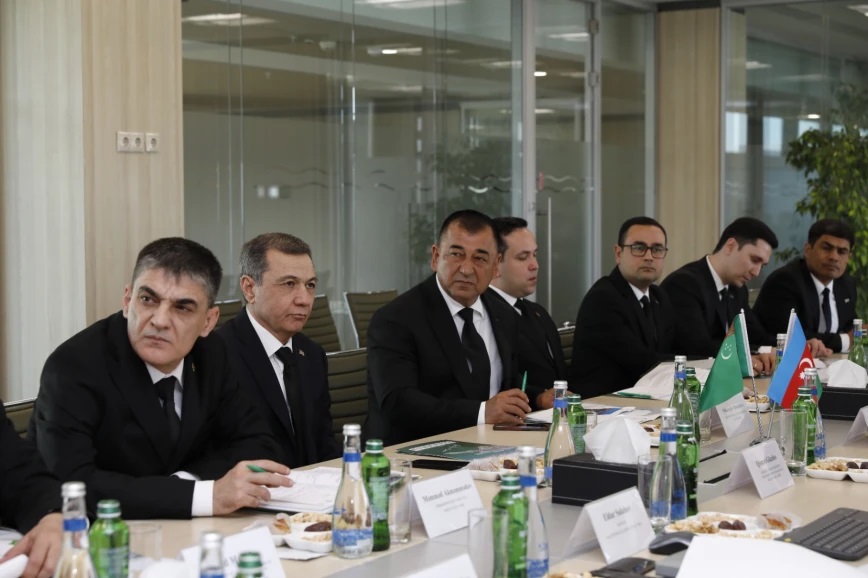
Discussions with Minister of Digital Development and Transport of Azerbaijan Rashad Nabiyev confirmed that the future of the corridor lies in digital data exchange. Coordinated work between the railway administrations and ports of the two countries in real time will significantly accelerate the transit of cargo along the East-West-East vector.
Deputy Prime Minister Nokerguly Atagulyev's visits to Georgia and Azerbaijan this week mark a new stage in Turkmenistan's foreign economic policy. We are witnessing not just a series of meetings, but the active formation of a unified transport and technological space.
The synchronization of the ports of Turkmenbashi, Baku, and Poti/Anaklia is transforming Turkmenistan from a transit territory into a key operator of Eurasian routes. The topics raised during the tour—from the creation of its own logistics centers in Georgia to dredging in the Caspian Sea—indicate that Ashgabat is shifting to a policy of "smart logistics," where every infrastructure facility along the route operates as part of a single, well-oiled mechanism.
It's worth noting that the intensification of contacts between Ashgabat and Baku is taking place against the backdrop of a qualitative change in the regional architecture. Azerbaijan's participation in the Consultative Meetings of the Heads of State of Central Asia has cemented Baku's status as a strategic bridge connecting the region to global markets. In this context, the modernization of the ports of Turkmenbashi and Alyat is viewed not only as a bilateral project but also as fulfilling the region-wide goal set by the heads of state to create a seamless "Central Asia-Caucasus-Europe" transport architecture.
Photo: economy.gov.az
Read also:

03.04.2026
|00:12
01.04.2026
|01:27
31.03.2026
|01:48

31.03.2026
|01:16


28.03.2026
|02:41
25.03.2026
|17:33