


The Energy Endgame and the Victory of Real Resources over Digital Illusions
02.04.2026 | 23:50 |
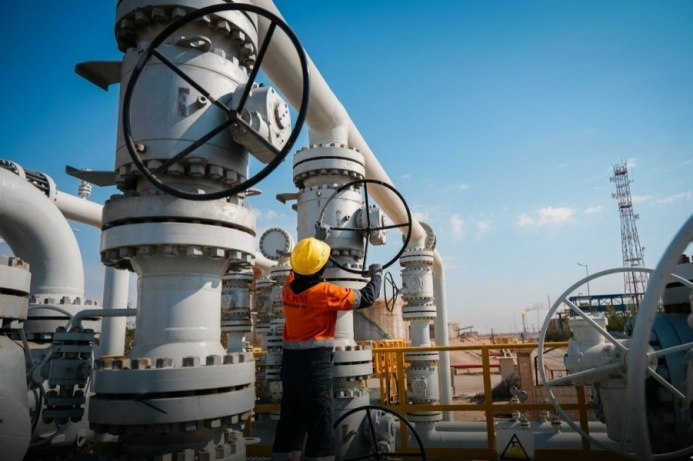


ORIENTIR | April 2. On the night of Thursday, April 2, 2026, global trading floors froze in a state of tense anticipation. The tense calm in the Persian Gulf only underscored the depth of the pent-up tensions.
Oil futures closed mixed the previous day. While the price of West Texas Intermediate crude for May delivery on the New York Mercantile Exchange fell by $1.50 to $101.38 per barrel, on the London ICE Exchange, Brent crude rose almost five percent to $118.35 per barrel.
After a sharp rise at the beginning of the week, Brent prices have stabilized around $115–$116, but this temporary plateau should not be mistaken for a respite – the markets are simply taking a break, trying to understand the new rules of the game.
On the one hand, Tehran, represented by Minister Mohsen Paknejad, sharply reduced the discount on export shipments, effectively depriving buyers of cheap fuel. On the other hand, the only real anchor of stability was the decision by the US Office of Foreign Assets Control to extend the transit license for Russian oil to China through Kazakhstan until March 19, 2027.
This move calmed Asian markets, once again confirming that land arteries remain intact, despite the conflagration in the straits!
The current crisis in the Persian Gulf has clearly demonstrated that modern civilization is literally intertwined with hydrocarbon products, and the petrochemical divide between pharmaceutical warehouses and cultivated fields is instantly felt in every home. This is no longer just a matter of expensive car trips, but a direct blow to the very foundations of survival.
There's no salvation even in the virtual world. Cryptocurrencies, which many considered an alternative to the "oil world," are behaving like a mirror of the general panic, and Bitcoin is trembling with every news item from the Gulf.
Pharmaceutical giants in India and the US are already signaling a critical shortage of components for the production of basic antibiotics and antipyretics. Oil has become too expensive to be converted into life-saving drugs, leaving global healthcare in a bind in the face of a logistical blockade.
While global markets are reeling from virtual indices, and Western agrochemical corporations are declaring technical pauses and halting production due to exorbitant gas prices, Turkmenistan's industrial giants are turning natural gas into tangible food security.
The Garabogazkarbamid plant, with a design capacity of over one million tons of urea per year, operates smoothly, relying on its own raw material base. The Mary cluster supplements this capacity with hundreds of thousands of tons of nitrogen fertilizers, allowing the state not only to meet domestic needs but also to export volumes comparable to the consumption of entire countries in the region.
With sea routes blocked, direct rail shipments of Turkmen produce are becoming a lifeline for farmers during the spring planting season in Central and South Asia. This clearly demonstrates that no digital codes can replace real heat in homes, fertilizer in the fields, or essential medications in pharmacies.
Global rhetoric has become increasingly harsh over the past 48 hours. Donald Trump is openly declaring that temporary permits to unload tankers are expiring, and Washington is ready to adopt a strategy of dominance. In response, Moscow and Beijing are relying on land corridors that are physically impossible to cut from the outside.
All eyes are currently on April 11, the day Washington's temporary permits to unload tankers carrying Russian oil expire. It could be followed by "Black Monday" on April 13: if the US does not extend the oil amnesty, analysts predict a surge in Brent crude to $135-$150.
The current lull is a moment of truth. The world has realized that digital indices are powerless against a physical shortage of raw materials. True power is now measured by the presence of operating refineries and reliable pipelines.
The world may argue about stock prices in London, but Eurasia's future is being secured here today – through the reliable land routes and existing enterprises of Central Asia. In this global game, the advantage goes to those who ensure the region's true stability, turning their own mineral wealth into a tool for peace and creation.
Bekdurdy AMANSARYEV
Photo: ORIENT/AI
Read also:
03.04.2026
|00:12
01.04.2026
|01:27
31.03.2026
|01:48
31.03.2026
|01:16

28.03.2026
|02:41
25.03.2026
|17:33