Fragile Silence and the Echo of Resource Scarcity on the Table of the Common Man
12.04.2026 | 18:57 |
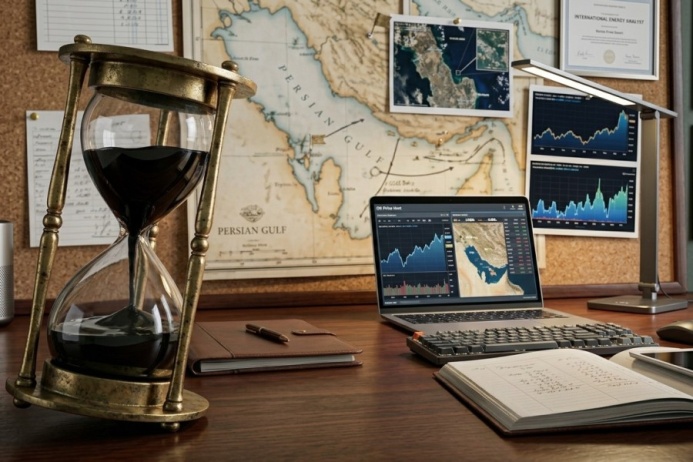


ORIENTIR | April 11. We are living in a time of global tectonic shifts, uncompromising competition in global markets for energy resources and technologies, and, more generally, for the political future.
But today, on the eve of the "hour X" set for April 11, the world has come to a standstill. And the transition from late Friday night to early Saturday morning greeted us with a paradoxical silence, which, in reality, turned out to be merely a pause before a new round of battles to the last drop of oil.
The overall picture on global stock exchanges by the end of the work week and the beginning of the weekend resembled cooling ashes. The shaky truce in the Persian Gulf temporarily doused the speculative flames, but did not solve the underlying problems of a shortage of real resources.
Amid nervous anticipation, oil prices registered a chilly decline, settling in London at $96.40 per barrel for Brent, while American WTI fell to $91.20.
The market seemed to be holding its breath, hoping for success in the Pakistan talks at that very moment, but OPEC+ remains stubbornly silent, understanding that any talk of quotas is powerless until the Strait of Hormuz is physically unblocked.
Asia is a major recipient of oil from the Middle East. China relies on energy from the Persian Gulf for approximately 50% of its supply, Taiwan and South Korea for approximately 65-67%, and the Philippines and Japan for almost all of their supply.
Against this backdrop, the situation for suppliers looks dire. Analysts believe Middle Eastern countries will not soon recover from the damage caused by the crisis. Saudi Arabia has cut oil production by 600,000 barrels per day due to the attacks. Qatari refineries have lost 17% of their liquefied natural gas capacity.
This macroeconomic uncertainty, coupled with the divergence of supplier capabilities and recipient needs, has immediately impacted the wallets of ordinary people around the world, revealing a deep rift in gasoline prices. Hong Kong has recorded a peak of $4.15 per liter, while in Berlin and London, prices have reached $2.20, forcing thousands of people to become "fuel tourists" and travel to neighboring countries for cheaper gasoline.
In the US, fuel prices also continue to rise, despite Trump's announced ceasefire with Iran, while Central Asia remains unusually calm. In Turkmenistan, the price of gasoline has remained stable throughout the year—around $0.43 per liter—even though other parts of the world have already introduced strict limits at gas stations, dispensing no more than twenty liters per customer. And in some countries, such as Ireland, gasoline at gas stations inexorably runs out.
The situation has become so dire that Japan has taken extreme measures, officially unfreezing its strategic petroleum reserves, acknowledging that hopes for a quick reopening of seaborne supplies are too precarious. This step is part of a broader strategy by G7 countries to stabilize the energy market.
Oil is just the tip of the crisis iceberg, as it is followed by a gas trap and an unseen logistical clot. Liquefied natural gas prices have jumped to $1,200 as previously loaded Qatari tankers are stuck in a "death trap." The energy shortage has led to rolling blackouts in several countries.
We talk a lot about oil and gas, but forget about container shipping. The blockade in Hormuz is not only trapped oil, but also millions of tons of other goods – from spare parts to fabrics. The average person will feel the crisis not only through rising gas prices but also through the lack of familiar goods on store shelves. They see not only dark streets but also empty store shelves, where spare parts and fabrics are gradually disappearing, followed by a food crisis.
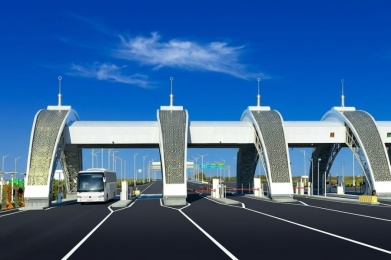
This once again underscores the value of Turkmenistan's railways and roads, which are now becoming the path to the "oil" and "commodity" salvation of Eurasia. One such road was opened today: President Serdar Berdimuhamedov commissioned the final section of the Ashgabat-Turkmenabat highway – the Mary-Turkmenabat section. The highway not only connects Turkmenistan's regions but also integrates the country into the global transportation and logistics system.
The uninterrupted operation of the Strait of Hormuz – one of the most important arteries of the global economy – directly affects the cost and delivery times of chemical products, equipment, electronics, and much more.
Prices for nitrogen fertilizers (urea), produced from gas, rose on global markets by almost a quarter – 22% – in just one week, threatening spring planting in many countries, as well as the future harvest of wheat and other strategically important food products, and leading to price increases in many countries as early as the fall-winter season.
It is precisely in the current situation surrounding Iran and the Strait of Hormuz that the idea of building an LNG plant in Pakistan using gas from the TAPI pipeline is particularly pressing.
The Pakistani port of Gwadar is located on the Arabian Sea, 120 kilometers from the border with Iran and 380 kilometers from Oman. The port of Karachi is even further away, approximately 1,915 kilometers as the crow flies. Not that far, but not exactly close to the Persian Gulf's hot spots.
The Arabian Sea is part of the Indian Ocean—it naturally flows into the ocean, opening the way to anywhere in the world. But the main destination is the countries of the Far East, which are in dire need of LNG and were supplied by Qatar. However, its production capacity, as already mentioned, was severely damaged in the Middle East conflict.
The implementation of the idea to jointly build LNG plants on the Pakistani coast will allow Turkmen gas to reach the world's oceans, and Pakistan will transform from a simple energy transit country into a significant player in the gas market.
Then the missing logistics link will emerge. Japan will be able to enter into direct contracts for "Turkmen LNG" from Pakistani ports. For Tokyo, this would be an ideal scenario: gas would be transported overland via TAPI (which is safe), liquefied on the Indian Ocean coast, and shipped by tankers, bypassing the volatile Strait of Hormuz. Such a maneuver could change geopolitics.
…The world is currently frantically seeking refuge in real assets, and gold, which has steadied at $2,315 per troy ounce, clearly confirms this. Meanwhile, the market capitalization of Western giants (and not just oil and gas) is sagging by 12-15% under the weight of the energy crisis. And rumors of tanker fees being paid in Bitcoin turned out to be nothing more than a hoax designed to undermine the dollar, while the quiet rise of the yuan is taking center stage.
The average person may not know what the S&P 500 index or futures, ounces, or stagnation are. But they feel how these high-sounding words affect their ability to feed their families.
Against this backdrop, the current situation has finally confirmed the reliability of onshore pipelines, which, despite their high cost, continue to successfully serve as lifelines. Independent experts confirm that in the foreseeable future, we will witness an era of "Land Renaissance."
Central Asia, with its own fuel resources and onshore logistics, vast power generation potential, and urea fertilizer production capacity, remains a place on the global map where planning continues for decades to come, while the rest of the world, in a panic, squanders the future on a far from life-saving sip of fuel. And that, too, is from old reserves.
Bekdurdy AMANSARYEV
Photo: ORIENT/AI
Read also:
10.04.2026
|17:37
08.04.2026
|17:31